
Energy audits help reveal why most Maryland homeowners experience energy loss that seems simple on the surface. A high utility bill usually gets blamed on rising energy prices or an aging HVAC system. What many people do not realize is that the real problem often starts with air movement inside the home itself.
Air is constantly moving through every house. It travels through attics, wall cavities, duct systems, crawl spaces, recessed lighting, window frames, and even electrical openings. When that airflow is uncontrolled, your HVAC system works harder, energy costs increase, and comfort becomes harder to maintain.
At Advanced Green Home Solutions, one of the most important things we evaluate during a home energy audit is how air moves throughout the structure. These hidden airflow patterns often explain why some rooms feel uncomfortable, why utility bills continue to rise, and why HVAC systems struggle to perform efficiently.
Understanding airflow is one of the most overlooked parts of improving home energy efficiency in Maryland.
Why Air Movement Matters More Than Most Homeowners Realize

Your home is designed to contain conditioned air. During winter, heated air should remain inside. During summer, cooled air should stay protected from outside heat and humidity. When air moves uncontrollably through gaps and leaks, that balance disappears.
Warm air naturally rises. In winter, heated indoor air escapes through attic penetrations, recessed lighting, and insulation gaps. As that air escapes, outside air is pulled into the lower portions of the home through crawl spaces, basements, and wall leaks. This process is often referred to as the stack effect.
The result is a constant cycle of energy loss that forces your HVAC system to work much harder than necessary.
According to the U.S. Department of Energy, air leakage can significantly increase residential heating and cooling costs.
What a Maryland Energy Audit Actually Detects
A proper home energy audit does far more than inspect insulation levels. At Advanced Green Home Solutions, our evaluations focus on identifying how air is entering, escaping, and circulating throughout the home.
During a home energy audit in Maryland, we use blower door testing to measure the amount of uncontrolled air leakage. This test temporarily changes air pressure inside the home, allowing hidden leaks to become easier to identify.
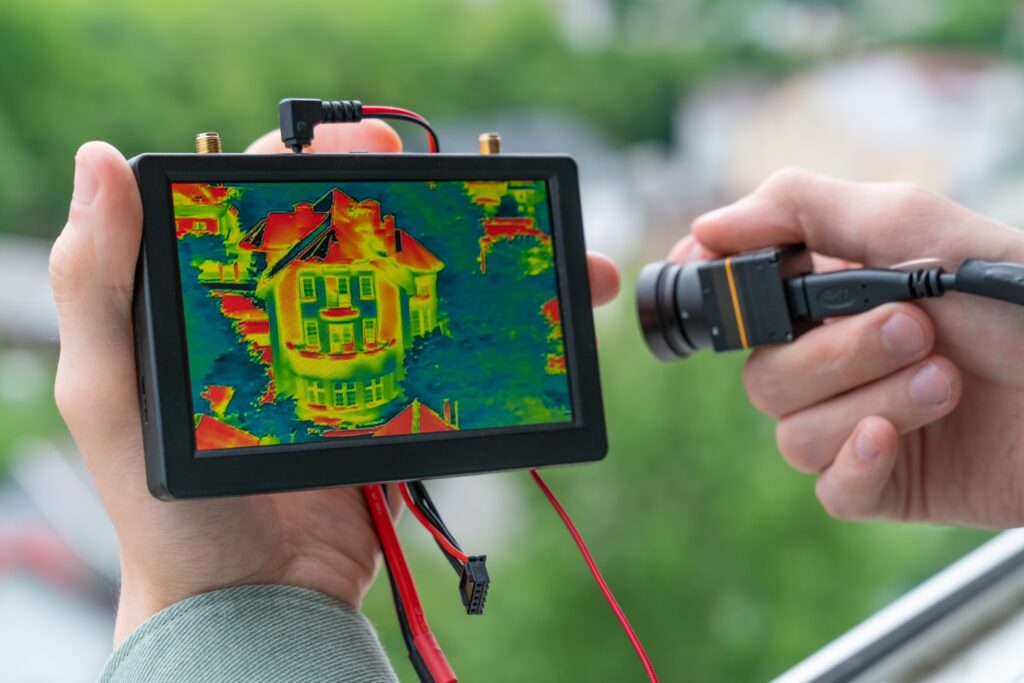
Infrared imaging also plays a major role. Thermal cameras reveal temperature differences behind walls, ceilings, and floors. These images often expose missing insulation, hidden drafts, and airflow pathways that homeowners would never detect on their own.
We also evaluate duct systems to determine whether conditioned air is escaping into attics or crawl spaces before it reaches living areas.
To learn more about the diagnostic process, visit https://advancedgreenhomesolutions.com/energy-audits/.
The Connection Between Airflow and High Utility Bills
One of the biggest complaints we hear from Maryland homeowners involves rising utility costs. In many cases, uncontrolled airflow is a major contributor.
When conditioned air escapes from the home, the HVAC system must continue running to replace it. This increases runtime, energy consumption, and overall system strain. Even small leaks around attic access points or duct joints can create measurable increases in utility costs over time.
Homes with poor airflow control also experience uneven temperatures. Certain rooms may remain too warm while others stay cold. Homeowners often respond by adjusting the thermostat, which only increases energy usage further.
Addressing airflow issues through air sealing and insulation improvements helps reduce energy waste and stabilize indoor temperatures at the same time.
Air Movement and HVAC Performance
HVAC systems are designed to operate within a balanced environment. When airflow problems exist, the system loses efficiency.
Leaky ducts are one of the most common issues found during energy audits. Conditioned air escapes into unconditioned areas, reducing the amount of heated or cooled air reaching living spaces. This forces the HVAC system to work longer cycles to maintain the thermostat setting.
Restricted airflow can also place additional stress on motors and system components. Over time, this reduces efficiency and may shorten equipment lifespan.
This is why HVAC performance and home efficiency must always be evaluated together rather than separately.
To understand how system performance impacts energy costs, visit our page that has information for HVAC and maintenance.
Why Some Rooms Never Feel Comfortable
Air movement issues often explain one of the most frustrating homeowner complaints, rooms that never feel comfortable.
Many Maryland homes experience pressure imbalances caused by poor duct design, insufficient return airflow, or insulation gaps. Bedrooms located farther from HVAC equipment may receive reduced airflow, while upper levels may overheat due to rising warm air. These comfort problems are rarely caused by the room itself. They are usually symptoms of larger airflow imbalances affecting the entire home.
A home energy audit helps identify where those imbalances begin and what corrections will provide the greatest improvement.
Maryland’s Climate Creates Additional Challenges
Maryland homes face both humid summers and cold winters, which makes airflow control especially important. During summer, humid outdoor air can infiltrate the home through leaks and gaps, increasing cooling demand and indoor moisture levels.
In winter, escaping heated air creates cold drafts and temperature inconsistencies. This constant exchange of indoor and outdoor air increases energy use while reducing overall comfort. Controlling airflow through proper insulation, air sealing, and ventilation improvements helps create a more stable indoor environment throughout every season.
The Environmental Protection Agency explains how home performance improvements support indoor efficiency and comfort.
Ventilation Is Part of the Solution
While uncontrolled air leakage creates problems, proper ventilation remains essential. Homes still need healthy air exchange to maintain indoor air quality and manage humidity.
The goal is controlled airflow rather than random leakage.
At Advanced Green Home Solutions, we evaluate ventilation systems as part of the whole home performance process. Balanced ventilation allows fresh air to enter efficiently while minimizing energy loss.
You can learn more about ventilation and indoor airflow in our recent blog.
Why Maryland Homeowners Benefit From a Whole Home Approach
Many homeowners try to solve efficiency problems one piece at a time. They replace windows, upgrade thermostats, or install new HVAC equipment without understanding how the entire home functions together.
A home energy audit in Maryland provides a complete picture of the home’s performance. Instead of treating symptoms, it identifies the underlying causes of energy loss and airflow imbalance.
At Advanced Green Home Solutions, our team includes BPI-certified building analysts, HVAC master technicians, and insulation professionals who work together to create solutions based on measurable data rather than assumptions.
As an elite BPI GoldStar Contractor and certified woman-owned MBE subcontractor, we focus on long-term results that improve efficiency, reduce utility costs, and support healthier indoor living.
Stop Letting Airflow Problems Drain Your Budget
Most homeowners never see the air moving through their home, but they feel the effects every month through rising utility bills and inconsistent comfort.
A professional energy audit reveals where energy is being lost, how airflow affects your HVAC system, and what improvements can create measurable savings.
Schedule your evaluation today and discover what your home may be hiding behind the walls.